
Last week, as Australia celebrated Book Week, ABC asked its Facebook followers a deceptively simple question:
“What did [the library] mean to you growing up?”
The question was prompted by something much less celebratory. As the ABC put it, some teachers say that “school libraries are quietly disappearing across the country.”
I responded:
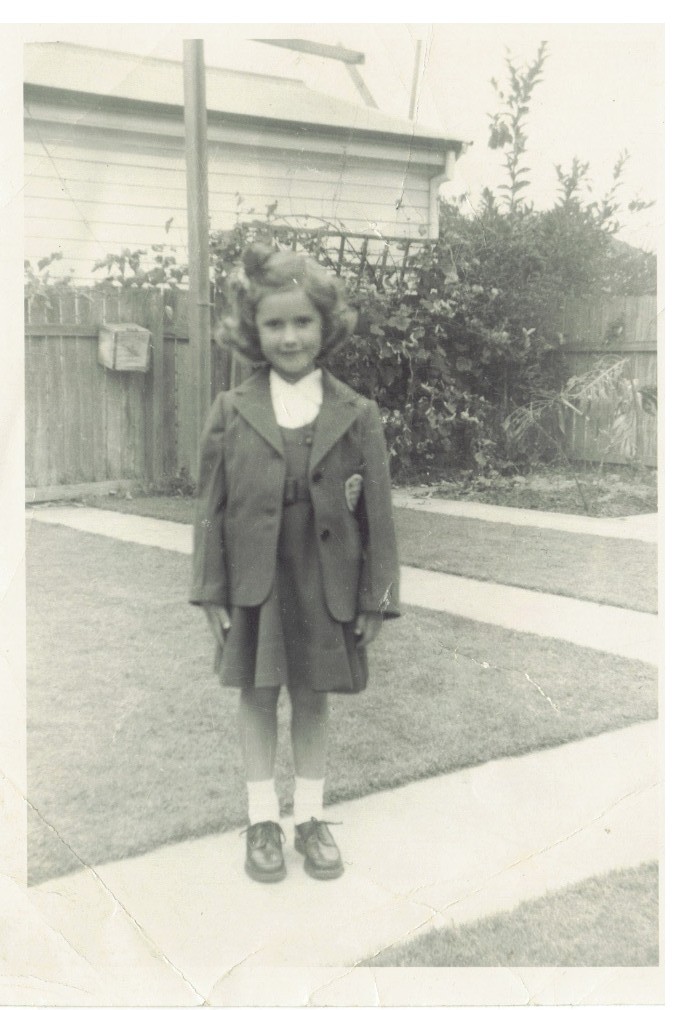
The State Library of NSW’s current initiative, The Library That Made Me, highlights the importance of the school library in developing reading and information skills and a sense of belonging. So many people named their school library as the most influential in their lives (for me it was the library at New Lambton South Public School in suburban Newcastle).
The perilous state of school libraries across Australia is a matter of deep concern. If we want a smart society we need to equip our young people with the skills and resources to achieve their potential.
Libraries rock.
It was only afterwards that I realised just how familiar those thoughts were.
Seventeen years ago, in 2009, when I was President of the Australian Library and Information Association (ALIA), I wrote an editorial for incite about school libraries and teacher librarians.
I began by asking colleagues, family and friends:
“What do you remember about your school library?”
My most productive research method was the tried-and-true tearoom “vox pop” formula. Reminiscences from Tasmania, the Gold Coast, Sydney, country NSW and Kentucky, USA, all told the same story of a warm, supportive atmosphere that encouraged learning and the joy of reading.
For me, there has never been much doubt about the library that made me. Although my family went to the public library every week, it was the school library that was central to the development of my love of reading and my independent lifelong learning and decision-making skills.
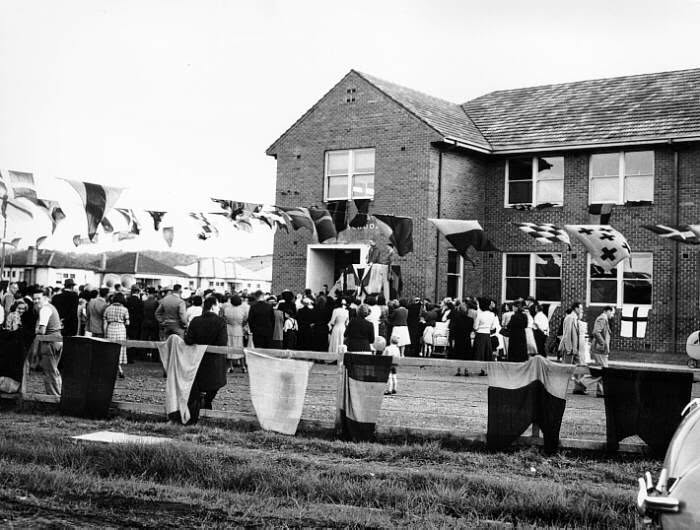
In reality, I can remember little about my time at primary school other than the memory of the library and the excitement and promise that it held.
Some years ago, a friend and colleague from my days at Wollongong City Library, Rosemary Worley, and I made a trip back to our former school in Newcastle expressly to visit the library. We were overwhelmed by the smallness of the space, especially when we were told that it had been expanded since “our time”! That this small space had such an influence on both our thinking is testament to the passion of the staff.
When I wrote my 2009 editorial, I contacted New Lambton South to see if they could provide me with the name of the teacher librarian, or librarians, who had played such an important role in my formative years. Unfortunately, within my tight timeframe, they were unable to assist.
So I wrote:
“If you were the teacher librarian at New Lambton South Public School between 1960 and 1965, a huge thank you.”
That thank you still stands.
I’m also a big fan of the bumper sticker “If you can read this, thank a teacher.” In 2009 I wondered whether there shouldn’t be a companion sticker along the lines of:
“If you enjoy reading, and know how to find information, thank a teacher librarian.”
I still think there should be.
My 2009 editorial wasn’t simply a nostalgic reflection. I was concerned about what the research was telling us about Australian school libraries.
Two studies released that year found that 50 per cent of the Australian school libraries surveyed were trying to do their job on an annual budget of less than $10,000, while teacher librarians were under pressure to spend more and more time outside the school library.
At the time I wrote:
Teacher librarians and school libraries can be the catalyst for improving reading skills and information literacy, and these in turn are the building blocks of a thriving national economy and culture.
Seventeen years later, the evidence supporting the value of school libraries has grown stronger. Unfortunately, the case still needs to be made.
The 2025 Australian School Library Survey, with responses from more than 1,000 schools, found that 43 per cent of respondents considered their school library budget inadequate and 56 per cent believed their library was inadequately staffed. A quarter reported that staffing had decreased in the previous year. Contemporary research also continues to demonstrate the positive contribution that well-resourced, professionally led school libraries make to student literacy, learning and wellbeing.
The figures may have changed since 2009, but the fundamental issue has not. If we want a smart, informed society, we need to equip our young people with the skills and resources to achieve their potential.
There is another rather wonderful symmetry in revisiting my 2009 editorial.
Towards the end of it I wrote:
“In early October … I will be attending the Australian School Library Association Conference in Perth. I look forward to meeting with colleagues and discussing ways in which we can work together to ensure the vigour of the school library.”
Later this month, I will once again attend an Australian School Library Association Conference, this time in Hobart, where I will be facilitating a session on banned books. The circumstances may have changed, but some of the fundamental questions have not.
How do we ensure that young people have access to rich and diverse collections? How do we support their freedom to read and explore ideas? How do we give them the skills to find, assess and understand information in an increasingly complex information environment? And how do we ensure that school libraries and the people who work in them have the resources and recognition they need to do all of this?
As partners in the education community, teacher librarians are in a unique and trusted position to maximise the opportunities for their students.
I wrote that in 2009.
I wouldn’t change it today.
Perhaps the afterglow of Book Week is an especially appropriate time to reflect on all of this, and on the library that made me.
My school library fostered my lifelong love of reading. It helped give me the information skills that have served me throughout my life. But looking back, I realise there was another gift as well: it fostered my appreciation of Australian authors and Australian stories. The library didn’t simply teach me that reading was something I could do. It taught me that reading was something I could love. It opened doors into worlds beyond my own while introducing me to stories from my own country.
That is part of the magic of Book Week. It celebrates books, authors and illustrators, but it also reminds us of the people and places that bring children and books together.
More than sixty years later, I still don’t know the name of the teacher librarian who helped make such a difference to a little girl at New Lambton South Public School.
I wish I did.
But I remember the library.
It was the library that made me.
Postscript
Since writing this reflection, news has emerged that Catholic Schools Maitland-Newcastle is consulting on proposed staffing changes for 2027 that would see teacher librarian positions cut across its 58 schools, with teacher librarians redeployed to other curriculum areas and school libraries likely to be managed by library assistants or student support officers.
There is a particular poignancy in this for me. Newcastle and the Hunter is where my own story began, where an unknown teacher librarian at New Lambton South Public School helped foster my love of reading, my appreciation of Australian authors and, importantly, the information skills that have served me throughout my life.
Catholic Schools Maitland-Newcastle has said that the proposed changes are about long-term financial sustainability and strengthening educational outcomes, and that school libraries themselves will remain. But a library without a teacher librarian is not simply the same educational service delivered by someone with a different job title.
Teacher librarians bring together the skills of educators and information professionals. At a time when our young people are navigating AI, misinformation and an increasingly complex information environment, those skills surely matter more, not less.
There is an uncomfortable irony that Catholic Schools Maitland-Newcastle’s own professional learning program for teacher librarians this year includes “Building Information Fluency” and “Media Literacy in the era of AI”, precisely the capabilities our young people need.
In 2009 I wrote that teacher librarians were “in a unique and trusted position to maximise the opportunities for their students.”
Seventeen years later, and more than sixty years after a teacher librarian in Newcastle helped shape my own life, I find myself needing to say it again.
If you enjoy reading, and know how to find information, thank a teacher librarian.

